> For the complete documentation index, see [llms.txt](https://support.happydemics.com/llms.txt). Markdown versions of documentation pages are available by appending `.md` to page URLs; this page is available as [Markdown](https://support.happydemics.com/analysis/brand-lift-results/how-are-kpis-categorized.md).
# How are KPIs categorized?
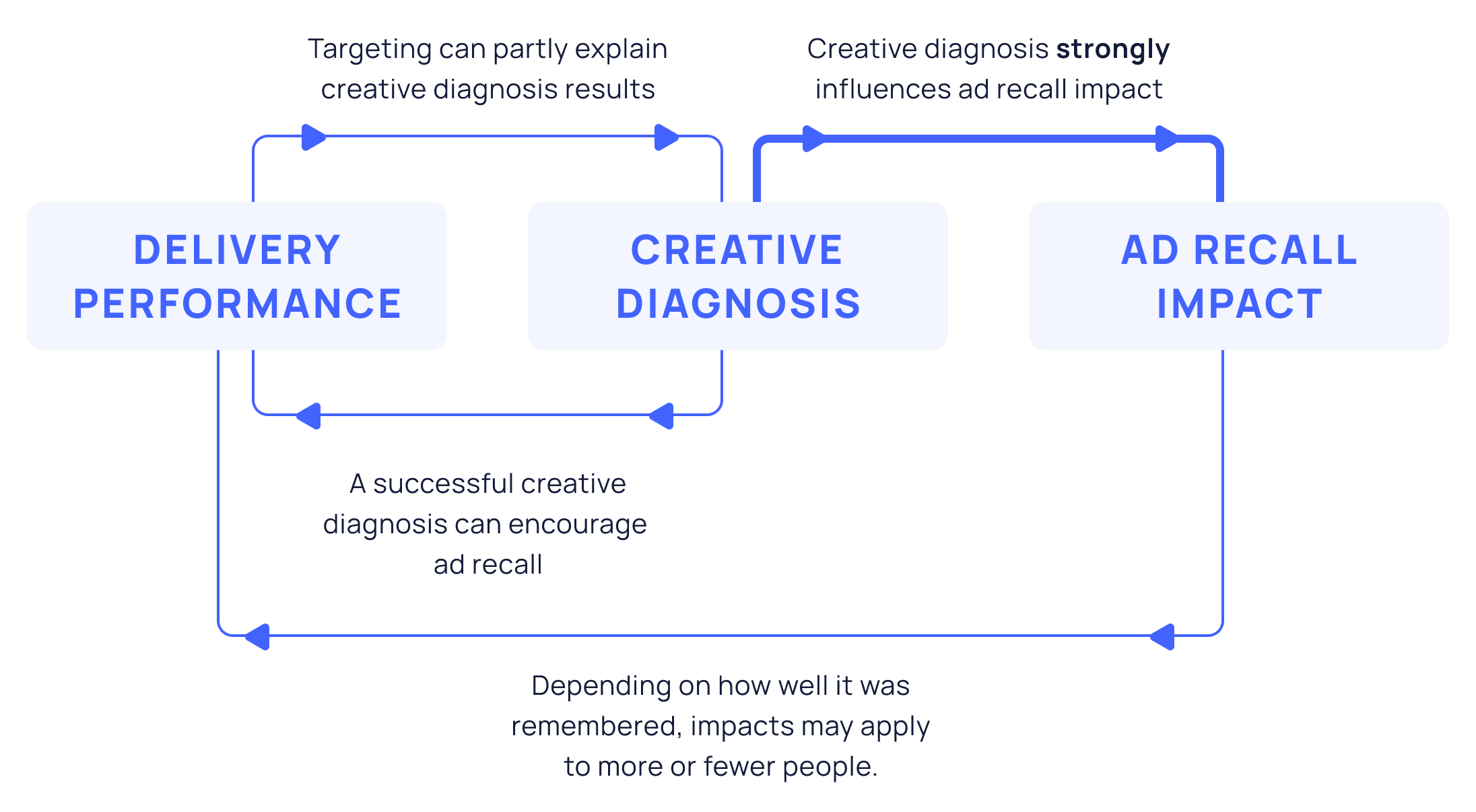
What is the relationship between the different types of KPIs?
### Delivery performance
Delivery performance measures the ability of a campaign to be seen, to generate recall and to have correctly targeted the desired audience. The ad recall indicator is key in this part.
### Creative diagnosis
The creative diagnosis section covers the campaign's performance from a creative standpoint and its perception.
The indicators used allow us to assess the relevance and creative effectiveness of the advertising message, based on the attention people have paid to it. The better the creative diagnosis, the better the performance of the campaign in terms of brand impact.
### Advertising recall impact
The impact of advertising recall compares the gaps between the population that has memorized the ad and those that haven't or have never been exposed to it. These differences tell us whether the campaign has had an impact on brand indicators.
Depending on the campaign's objectives, the indicators measured will be different. For example, if the campaign's aim is to increase brand awareness and image, we'll analyze variations in brand perception. If the advertising is meant to trigger a purchase, we'll look at variations in consideration rate and purchase intention.
## How to access detailed results?
On each slide of the report, you'll find a link to your results. You can drill down into the results, analyze response details or create different sub-targets. You can also view detailed answers directly on the report slide, by clicking on the eye icon next to the question.